

Robot Research Source Maintenance: Read Artifact Retention
2026-11-04
Robot Research Source Maintenance: Read Artifact Retention
Artifact retention can matter when an editor returns to a robotics research source pack and a workflow attachment is no longer available. The missing attachment is an evidence-availability question; it does not by itself establish that a research result failed or that a paper was withdrawn. This article uses fictional repository material and current GitHub documentation. It does not query a repository, retrieve an artifact or report a new research event.
Identify the missing object precisely
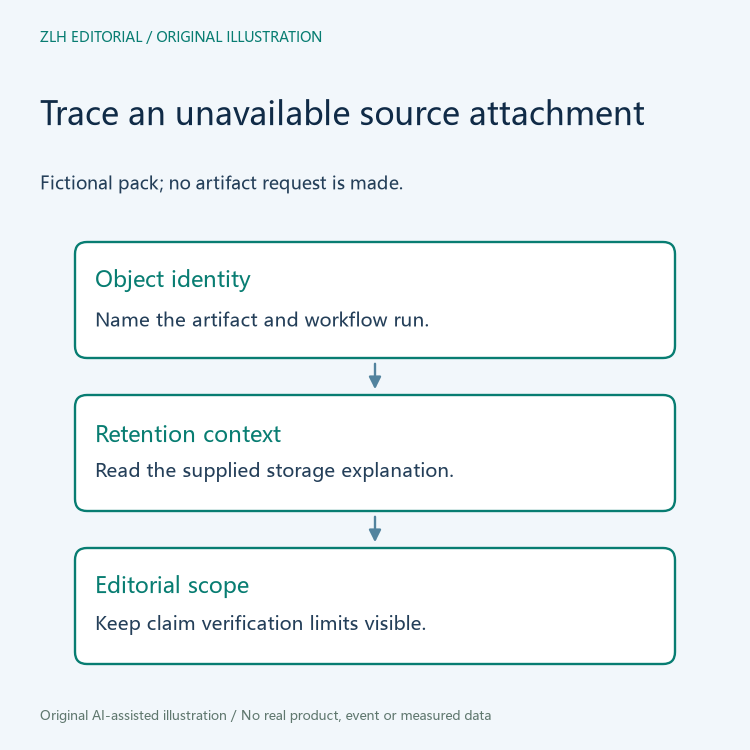
Imagine a fictional editorial note linking to a workflow attachment that once contained supporting output. The contributor later says the research source disappeared. Ask which object is unavailable: the repository, workflow run, attachment metadata or downloadable archive. Those are distinct materials. The maintenance record should identify the original reference and the observation supplied, rather than collapsing them into a broad statement about the research itself.
Keep the workflow run identity, attachment name and source-pack version when those are provided. A friendly artifact name alone may not explain which run produced it. If the original handover omitted those details, retain that omission as a question. Do not invent a run identity or substitute a similarly named attachment and describe it as the same evidence without a documented relationship.
Read retention as a storage setting
The official GitHub workflow artifact tutorial describes storing outputs and configuring an artifact's retention period with retention-days, subject to the repository, organisation or enterprise limit. This establishes that retention is part of the storage context. It does not establish the setting used by a particular fictional repository or explain every possible reason an attachment is unavailable.
For the fictional source pack, request the supplied retention information and its relation to the artifact version. Do not copy a duration from a documentation example into the editorial record as if it were a project setting. A configuration file also needs to be linked to the relevant run. The reviewer should preserve the distinction between an intended setting and observed availability at a later time.
Read artifact metadata without turning examples into results
The GitHub REST artifact reference documents artifact information, with examples including an expired field, an expiry time and an associated workflow run. These fields help identify the object a provider is describing. The examples are API documentation, not responses from an actual robotics project. This article performs no authenticated or unauthenticated artifact request.
A fictional provider can supply a retained metadata record and explain the source of its fields. The editor should ask whether it concerns the same artifact originally cited. A metadata record can help identify an attachment without supplying its contents. Conversely, a local archive needs a documented relationship to the run; it should not be treated as the cited output merely because its folder name resembles the artifact label.
Separate access findings from research findings
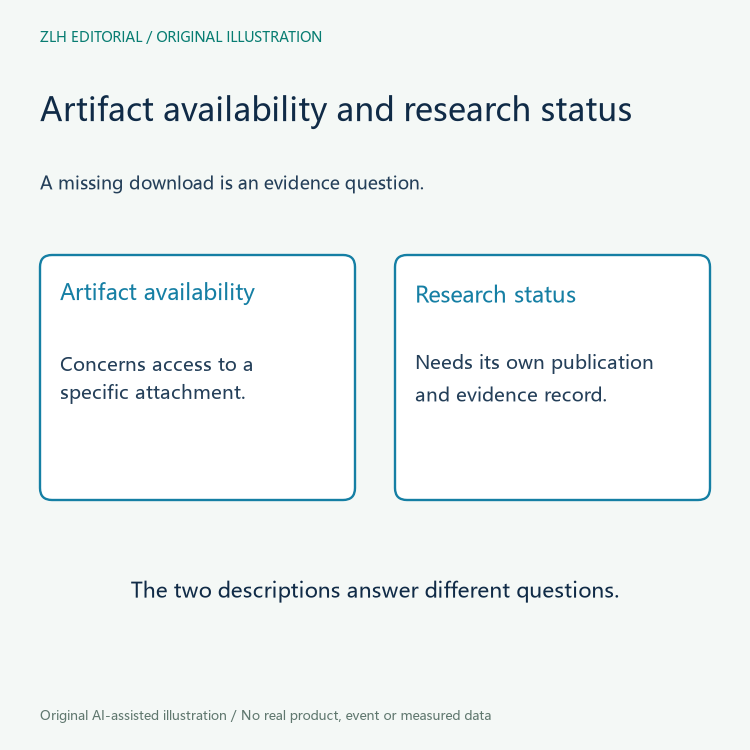
If a supporting attachment cannot be examined, the editor should preserve that limit in the claim review. It may prevent verification of a specific detail, but it is not a substitute for reading the paper or evaluating its evidence. Do not narrate an unavailable archive as a failed experiment, and do not treat a still-available archive as proof that the reported method is correct.
Suppose the fictional pack contains a contributor's summary of the missing attachment. Label the summary as that contributor's account, rather than presenting it as the editor's direct observation. If an alternative copy is later supplied, record its identity and relationship before using it. The article has no actual attachment or research result, so it reports no experiment, deletion, expiry event or publication change.
Keep the maintenance note useful for later review
A precise finding identifies the unavailable object, what material was actually inspected and which claim details remain unverified. It separately records any retention explanation supplied by the provider. If availability changes later, preserve the new observation with its time rather than rewriting the earlier record as if the attachment had always been accessible. Evidence availability is itself a versioned part of the editorial handover.
The source pack can also name the person responsible for retaining or explaining supporting material. That does not guarantee future access, but it gives a later reviewer a concrete contact role within the documentation. Avoid broad assurances about reproducibility when the actual review has only established where an attachment was supposed to be stored.
Further methods are organised in the technical material category and related resource category. These are reading categories, not research verification services. Keeping artifact identity, retention context and claim evidence separate allows an editor to describe a source limitation accurately without inventing a robotics news event.


