

Robot Demo Pack Acceptance: Identify the Playback Rate
2026-11-02
Robot Demo Pack Acceptance: Identify the Playback Rate
Playback rate is part of the viewing context when a buyer reviews a robotics demonstration clip. A player can present the supplied media faster or slower, while the editorial task may concern what the recorded activity actually shows. Before accepting a demonstration pack, ask which timing statement the supplier intends to support. This proposed checklist plays no video, measures no cycle, and evaluates no real robot performance.
Define the timing question before watching the clip
Ask whether the supplier is offering a visual explanation, an edited demonstration, or evidence for a stated performance claim. Those roles can overlap, but they should not be merged without explanation. A visually persuasive sequence does not identify every condition needed to interpret a timing statement.
The receiving reviewer should identify the actual media asset and the presentation context. A clip embedded in a website and the underlying file are related objects, but the website can add player controls or other presentation behavior. The handover should preserve that distinction. Ask who maintains the presentation and who can explain a changed clip, so a later reviewer knows which part of the delivery has been revised.
Prepare a place to record the timing claim exactly as supplied, including its scope. If no such claim exists, do not create one from the apparent speed of the video. A review can accept an explanatory illustration within its agreed role without pretending that it measured production performance.
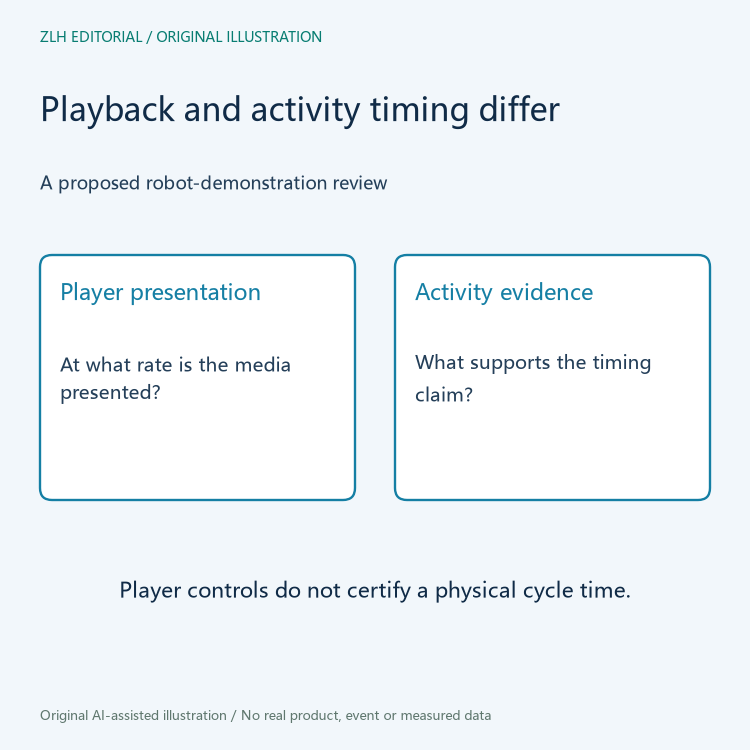
Distinguish player rate from the recorded activity
The MDN playbackRate reference describes the property as controlling the rate at which media is played, using a multiplier of normal playback. That is a property of the playback context. It should not be confused with an independently established time for a physical robot activity.
Ask the supplier what playback arrangement the demonstration expects the buyer to use. If a later authorized observation records a player setting, retain it with the asset and viewing context. Do not infer the original capture or editing history solely from the setting visible in the player.
Changing a player rate also does not reconstruct missing recording context. A reviewer should not treat normal-looking playback as proof that footage was unedited or recorded under particular operating conditions. Those claims require appropriate evidence about the source material.
Read media controls within their documented scope
The HTML media specification defines media-element timing and playback properties, including playbackRate and currentTime. These concepts describe presentation of media. They do not, by themselves, certify the duration or completeness of the underlying physical activity depicted.
The buyer should ask which media timeline the supplier’s explanation concerns and whether the presentation introduces any relevant behavior. A report should distinguish an observation of the player from a claim about the robot. Both may be useful, but they answer different questions.
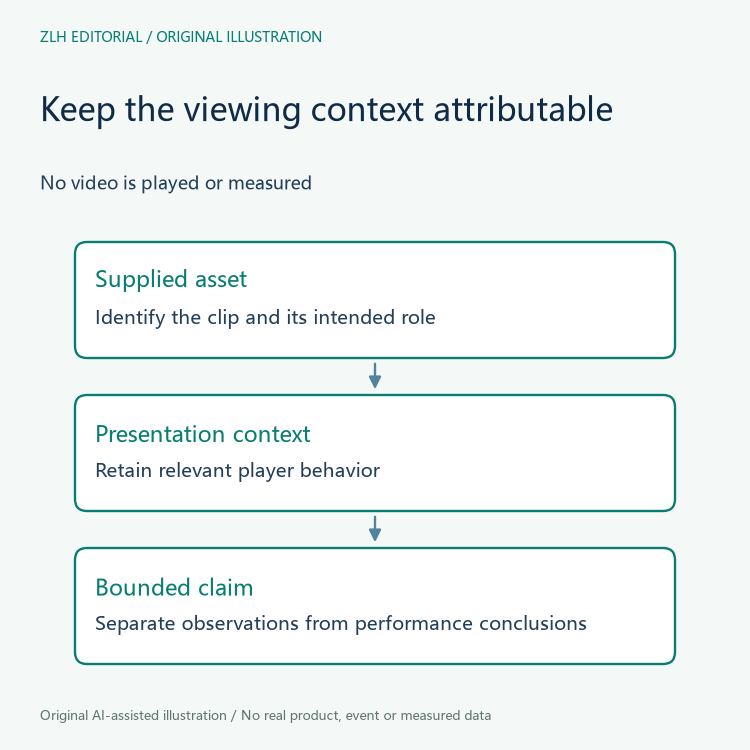
No playback settings or timeline values are generated here. A later review should record the actual asset, controls, and observation. Documentation examples should remain explanations rather than become a fictional viewing transcript for a supplier’s clip.
Keep performance evidence separate from viewing convenience
A supplier may reasonably provide slower playback to make a detail easier to see. That presentation choice does not automatically invalidate the clip’s explanatory purpose. The acceptance issue is whether the role is clear and whether any stronger timing claim has the evidence it needs.
If the buyer needs a performance comparison, ask what actual activity boundaries, conditions, and source records support it. The clip alone may leave those matters unexplained. Do not estimate a cycle from an edited sequence and present the estimate as a supplier test result.
Similarly, a smooth or rapid-looking motion should not be translated into repeatability, reliability, safety, or production suitability. Those conclusions require appropriate evidence beyond playback appearance. The proposed review remains about the demonstration pack and the scope of its timing explanation.
Accept a demonstration with an attributable presentation
The handover should identify the media asset, intended viewing arrangement, stated claim, and actual observations. If capture or editing context remains unknown, keep that uncertainty visible. A clear unresolved question is more useful than an invented account of how the clip was made.
When the supplier replaces the media or changes the player presentation, ask which earlier observations need renewal. Preserve the reviewed version and its context. A stable page address should not imply that every timing-related observation still concerns the same material.
Related explanations appear in our new robot demonstrations section and the reading directory. The original diagrams contain no actual footage, playback settings, cycle times, measured robot speeds, or completed acceptance tests.


